
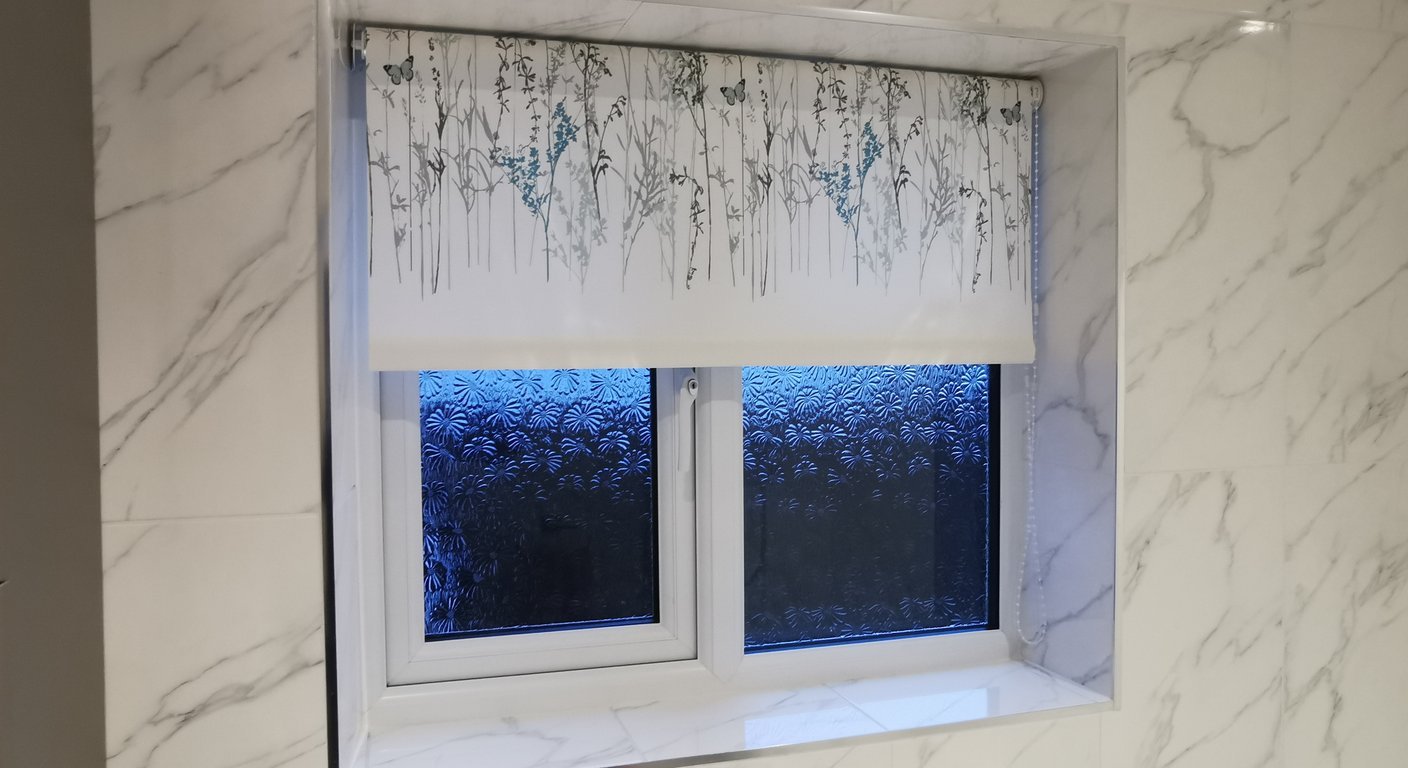
The heating’s on and the windows are wet again
It happens every year, usually the first week of October. The evenings get cold enough that somebody gives in and puts the heating on, and a few mornings later the bedroom windows are running with water. The sills are wet. There’s a little puddle in the corner of the bathroom frame. And when you pull the blind up, the bottom of it is damp to the touch.
That’s normally when the phone goes. Black spots along the bottom of a roller blind, or wooden slats in the bathroom starting to bow, and they want to know what’s wrong with the blind.
Usually nothing. I’ve said this to customers more times than I could count: people blame the blind, but the blind is just where you notice it first. The water was always going to end up somewhere. The blind happens to be hanging right in front of the coldest surface in the room.
I’ll be straight with you: a blind won’t fix condensation. But the wrong blind will make it look a lot worse, and the right one will put up with it for years.
Quick Summary
- Condensation is warm, damp air meeting cold glass. Blinds don’t cause it
- A blind held tight against wet glass can trap moisture, and that’s when mould starts
- Ventilation does more than anything else, and a small gap behind the blind helps it dry out
- PVC rollers, aluminium Venetians and faux wood all cope well with damp. Real wood and standard fabric don’t
- Light mould can often be cleaned off. Mould that’s gone into the fabric usually means a new blind
Why your windows stream in the morning
Warm air holds more moisture than cold air. When warm, damp air touches something cold, it can’t hold all that moisture any more, and the excess turns back into water on the cold surface. Glass is almost always the coldest thing in a room, so that’s where it collects.
There’s a surprising amount of water in the air of a normal house. Cooking, showers, boiling the kettle, drying washing on the airer, even just breathing all night with the door shut. In summer it’s not a problem because the windows are open and the glass is warm. Come October, the windows stay shut, the heating warms the air up, and the glass gets colder overnight. You couldn’t design better conditions for it.
You’ll tend to see it worst in:
- bedrooms first thing in the morning, especially with two people asleep and the door shut
- bathrooms after a shower, particularly if there’s no extractor or it isn’t doing much
- kitchens, around the sink and near the hob
- north-facing rooms, where the glass never gets any sun to warm it through
Older double glazing makes it worse. If one window is always wetter than the rest, the sealed unit may be on its way out, and that’s a job for a window company rather than us.
This past summer didn’t help either. We had the hottest one on record and most of us lived with every window wide open for months. Then September stayed warm right to the end. So the switch to shut windows and the heating on has been quite sudden this year, and a lot of houses are going through that adjustment all at once.
How the blind gets involved
Here’s where blinds come into it. A blind hanging close to the glass sits right in that cold, wet zone. If air can move around it, the moisture on the blind dries off during the day and you’d hardly know. If it can’t, the blind stays damp.
The worst case is a blind that’s pulled down all night, sitting tight against wet glass, and then left down most of the day as well. The fabric soaks up water at the bottom, never dries, and after a few weeks you get those little black dots along the hem. That’s mould, and once it’s started it spreads into the fabric.
It’s also why the bottom always goes first. That’s where the water runs to.
So the blind isn’t the cause, but it can be the place the damp gets stuck. That’s really the whole thing in a sentence.
What actually helps
Let the air move
Ventilation does more than anything you can buy from us. Open the window for ten or fifteen minutes in the morning, even when it’s cold. Use the extractor fan when you shower and leave it running a while afterwards. Keep the trickle vents at the top of the window frames open. Put lids on pans. If you can, dry washing outside or somewhere with the window cracked open.
None of that involves blinds, I know. But a new blind won’t solve what an open window will.
Raise the blind during the day
If your windows are streaming in the morning, pull the blind up once you’re up and about. It gives the glass and the blind a chance to dry out, and it lets a bit of sun do some of the work. A blind left down all day over a wet window is the one most likely to go mouldy.
Leave a gap behind it
This is where the fitting comes in. In rooms where we know condensation is going to be an issue, we think carefully about where the blind sits. Sometimes that means hanging it slightly further from the glass so air can get behind it, rather than tucking it as close as possible. For blinds fitted inside the window recess, we look at whether the bottom bar is going to end up sitting on a sill that’s wet every morning.
Perfect Fit blinds are an interesting one here. They clip into the window frame itself, so the blind is close to the glass by design. In a dry living room that’s no problem at all. In a bathroom or a cold bedroom, a Perfect Fit Venetian with aluminium slats copes fine because the slats don’t soak anything up and you can tilt them open to let air through. A fabric Perfect Fit Pleated in a really wet room is a different conversation, and we’d talk it through with you before fitting one.
That’s why we always want to see the room first. Two windows the same size can need completely different blinds.
Which blinds cope with damp rooms
We wrote a fuller guide to blinds for kitchens and bathrooms, but here’s the short version with condensation in mind.
Good choices
PVC roller blinds. A roller blind in a PVC or moisture-resistant fabric doesn’t soak up water, and you can wipe it down. We make our rollers here at the Eastern Way workshop, and PVC is what we’d usually suggest for a bathroom or over a kitchen sink. You’re not stuck with plain white either, there’s a decent range of patterns.
Aluminium Venetians. Water just sits on the slats until you wipe it off. They don’t rust, don’t warp, and you can tilt them to keep privacy while still letting air through. A lot of kitchens we fit end up with these.
Faux wood Venetians. If you like the look of wood, this is how you get it in a bathroom. They’re made from a PVC material that looks like timber but doesn’t take the water in, so the slats stay straight.
Ones to think twice about
Real wood. I love wooden blinds in a living room or a study. In a bathroom, or on a bedroom window that runs with water every morning, they’ll take on moisture and the slats bow. I wouldn’t put real wood anywhere that gets wet daily.
Standard fabric rollers and Romans. A lovely linen Roman blind in a steamy bathroom will not last. Fabric holds moisture, and fabric that stays damp gets mould. Romans are worse than rollers here because the folds trap water and they’re harder to keep clean. On a cold bedroom window it depends how bad the condensation is. A bit of moisture now and then is fine. Water running down the glass every morning is not.
Anything sitting on a wet sill. Whatever the blind is, if the bottom rail ends up resting in water every morning, it’s going to suffer. That’s a fitting question as much as a product question.
Getting mould off a blind (and when it’s too late)
If you’ve caught it early, mould on a blind is often cleanable. This is general care, the same as you’d do for anything else in the house.
PVC rollers, aluminium and faux wood are the easy ones. Warm water with a drop of washing-up liquid on a soft cloth, wipe the affected area, then dry it properly. For stubborn spots on PVC, a diluted mild mould spray made for bathrooms usually shifts it, but test a small hidden area first and rinse afterwards. Avoid neat bleach. It can mark coloured fabrics and damage some finishes.
Fabric rollers and Romans are trickier. A light dab with a cloth and mild soapy water can lift surface marks, but don’t soak the fabric. Many blind fabrics have a stiffening treatment, and once that’s soaked through the blind can go limp or start to ripple. Our care and cleaning guide goes through each type in more detail.
Be honest with yourself about when it’s past saving. If the black spots have gone right into the weave, if you clean them and they come back within a week, or if there’s a musty smell you can’t get rid of, the mould is in the fabric. At that point a new blind, in a material that suits the room, is the sensible answer. We’d much rather tell you that than sell you the same fabric again and see it go the same way next winter.
When it’s more than condensation
A wet window in the morning is normal for a lot of British houses in winter. But if you’re seeing mould on the walls, damp patches that don’t dry out, or a window that’s wet all day long, that’s worth getting looked at properly. It could be a ventilation problem, a failing window seal or something more structural. A new blind will hide it for a bit. It won’t fix it.
Talk to us before you replace it
If you’ve got a blind that’s gone mouldy, or you’re planning a new bathroom or kitchen and want to get it right first time, give us a ring. We’ll come out, look at the room, see where the condensation is collecting, and suggest something that’ll cope with it. If what you really need is a better extractor fan, we’ll tell you that too.
Call us on 01284 761333 or book a free measuring appointment. No hard sell, just honest advice from people who’ve been doing this for over 35 years.